

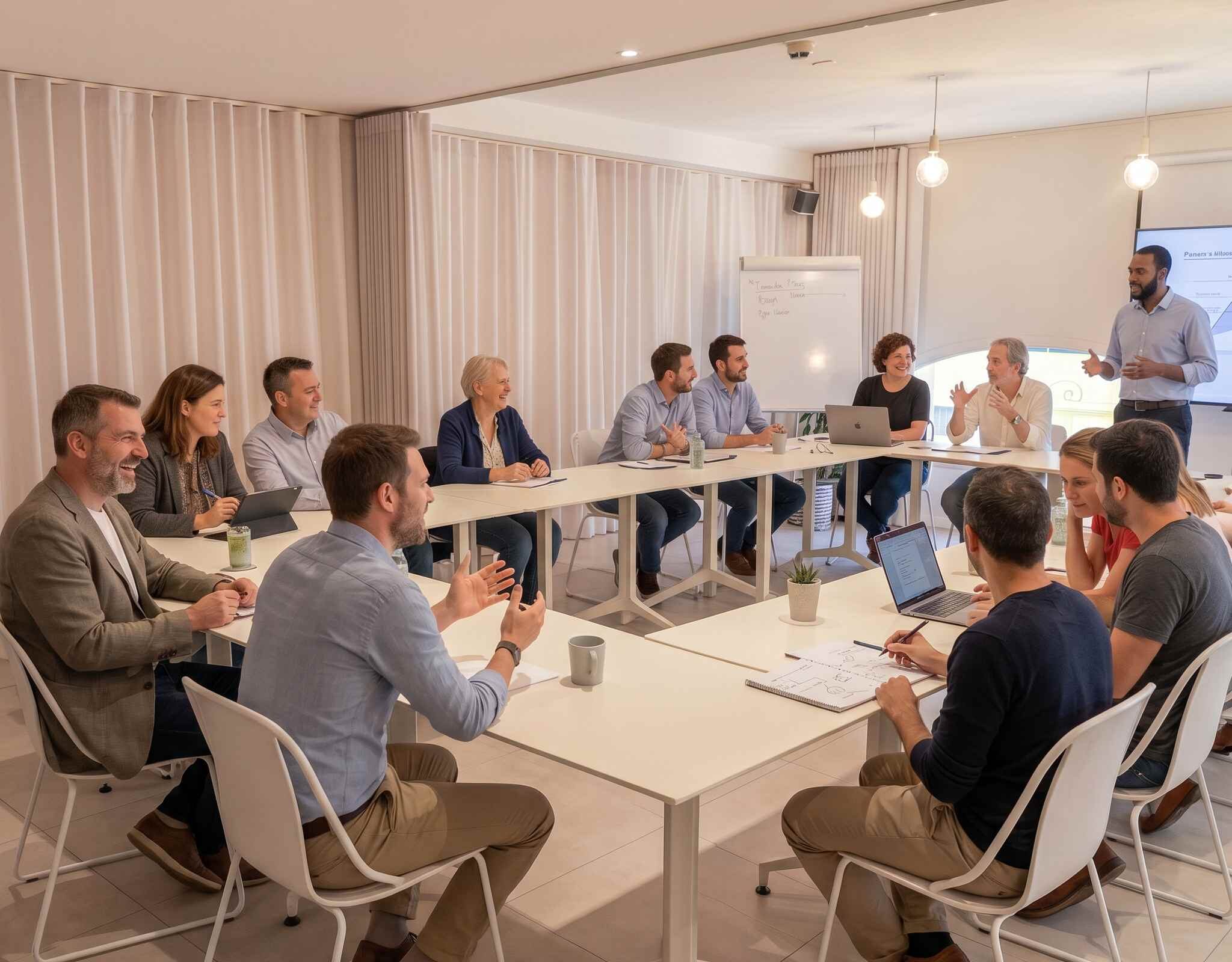
Organizing a business meeting at a hotel involves more than just booking a fully equipped room. It’s about creating a temporary workspace where decisions will be made, ideas exchanged, and, at times, strategic directions approved.
Right from the start, a key question arises: How can you organize a business meeting in a hotel without compromising on efficiency compared to a traditional office?
The answer rests on three pillars: preparation, venue selection, and event management. Without these three elements, the meeting becomes nothing more than a room rental, with no real impact.
At Scool, we start with a simple premise: a meeting held at a hotel should be more productive than an in-house meeting—not just more enjoyable.
Clearly define your goal before even choosing a hotel
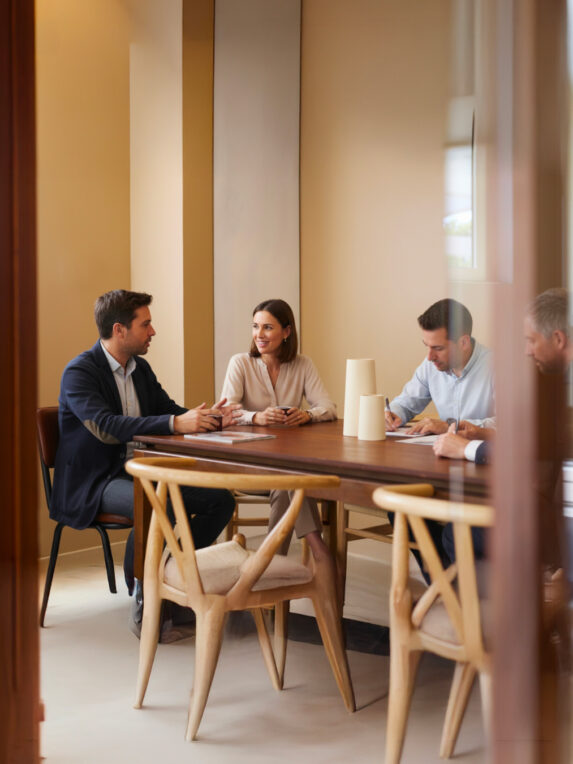
Before looking for a venue on the French Riviera, it is essential to define the purpose of the meeting.
A sales meeting, an executive committee meeting, a training session, or a collaborative workshop do not all require the same conditions.
This is often where things go wrong. Many companies choose a hotel before deciding on the exact format.
So the real question to ask is: what kind of business meeting should you organize at a hotel to achieve concrete results?
If the goal is to make decisions quickly, you need a closed, quiet space free from distractions. If the goal is creativity, a more open and flexible environment will be more suitable.
This step sets the stage for the rest of the organization.
Choose a hotel that’s suitable for work—not just for comfort
There is a wide range of hotels on the French Riviera. But not all hotels are suitable for business meetings.
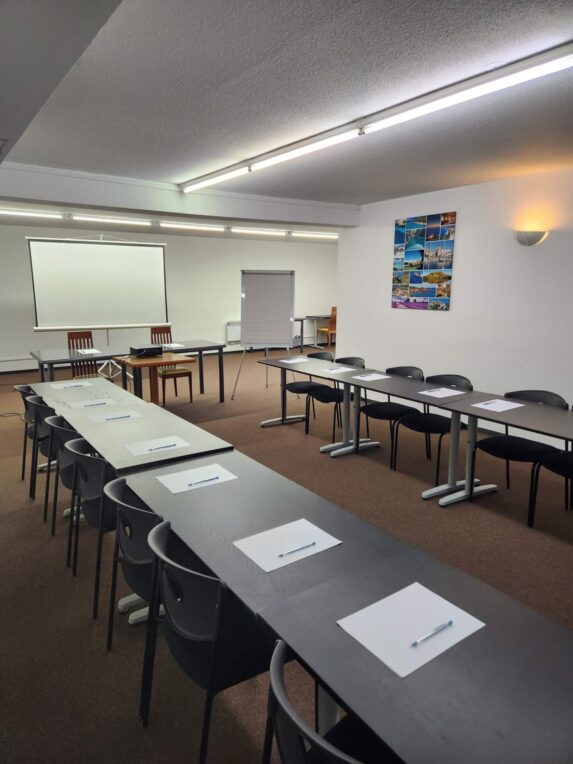
A good choice depends on the ability to provide a well-organized work environment. This includes functional rooms, a stable internet connection, controlled acoustics, and smooth logistics.
So, how do you choose a hotel to host an effective business meeting on the French Riviera? A hotel suited to business travel shouldn’t just be “beautiful.” It needs to be functional.
At Scool, we often see the same mistake: prioritizing aesthetics over functionality. However, a space that is too complex or poorly equipped immediately slows down the workflow.
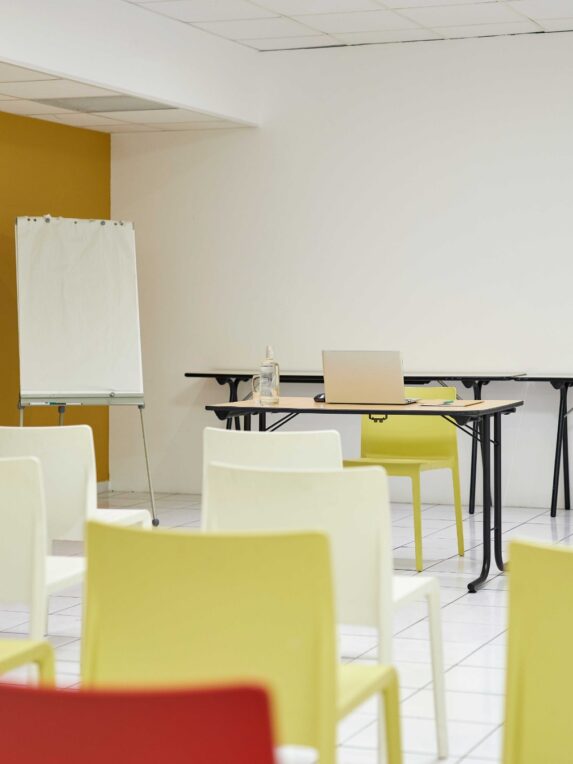
Plan the layout of the meeting room in advance
Once you’ve chosen a hotel, the room layout becomes a key consideration.
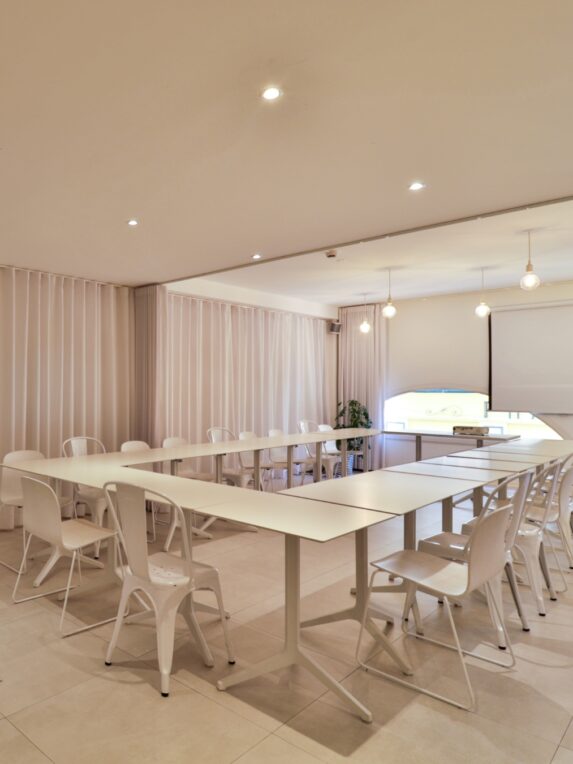
The seating arrangement directly affects the quality of interactions. A U-shaped table encourages discussion, a theater-style arrangement is better suited for presentations, and a clustered setup facilitates collaborative work.
What layout should you choose for a business meeting at a hotel? It depends on the participants’ roles.
If the meeting is top-down, a front-to-back seating arrangement works well. If it is participatory, it is important to encourage the free flow of ideas.
At Scool, we emphasize one thing: the room should never be neutral. It should support the purpose of the meeting.
Plan logistics in advance to avoid wasting time
A successful hotel meeting depends on behind-the-scenes logistics that are perfectly managed.
Internet connection, projection equipment, sound system, signage, break management: every detail counts.
One of the most common mistakes is to assume that everything will be “handled on site.”
However, organizing a business meeting at a hotel requires careful preparation in advance.
How can you plan the logistics for a business meeting at a hotel? At Scool, we recommend confirming every technical detail before participants arrive. This helps turn meeting time into productive time.
Leveraging informal time as a driver of performance
At a business meeting held in a hotel, breaks are never just simple interruptions in the proceedings. They play a key role in the meeting’s dynamics and directly influence the quality of the discussions.
A quick coffee between sessions, a shared lunch, or some casual time over a drink can often help get discussions moving, spark new ideas, or reframe certain topics with a fresh perspective.
On the French Riviera, this effect is even more pronounced. The setting has a direct impact on behavior: interactions become more fluid, hierarchies are less pronounced, and conversations become more spontaneous.
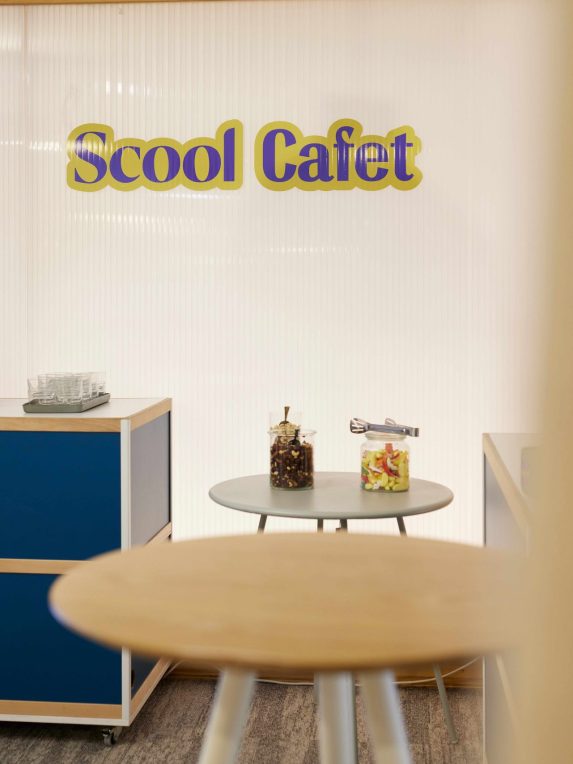
Scool Cafet’ was conceived as a space dedicated to informal gatherings, located at the heart of Scool and designed to serve as a true transition zone during a day of business meetings.
This isn’t a break in the traditional sense. The goal is to maintain the momentum of the work in a more relaxed, spontaneous setting, where conversations can unfold differently than they would in a meeting room.
A quick coffee break between sessions, a casual chat, or a more informal discussion often helps ideas emerge in a different way, without the rigidity of a structured format.
These moments provide a breather in the course of the day while maintaining the flow of thought. Decisions become clearer, roadblocks are more easily overcome, and certain ideas take their final shape outside the formal setting.
Use the hotel setting as a tool for concentration
A well-chosen hotel is not just a convenient place to stay. It’s a way to take a break from the daily grind of work.
Changing your surroundings often helps you break out of your routine, reassess your priorities, and take a step back.
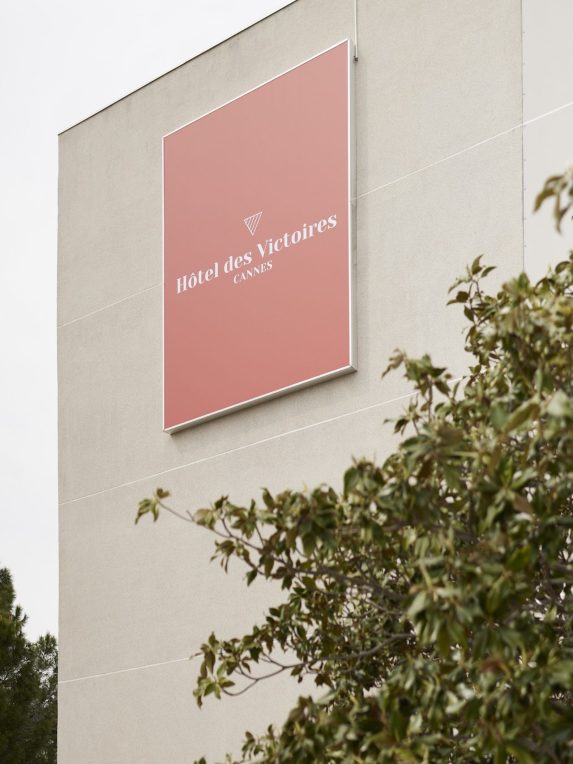
This is especially true at a 3-star hotel on the French Riviera that hosts business meetings, where the environment has a direct impact on the quality of interactions.
We have found that the best decisions are often made in simple, calm, and well-structured environments.
Organizing a business meeting at a hotel should never be seen as merely an alternative to the office.
It is a strategic tool designed to support decision-making, collaboration, and team performance.
On the French Riviera, hotels geared toward business travel offer an environment that is particularly well-suited to this type of use, provided that everything is carefully organized.
At Scool, we treat every meeting as a comprehensive process: a clear objective, a suitable venue, well-managed logistics, and a structured agenda.
It is this combination that transforms a simple meeting into a powerful tool for decision-making in professional spaces that are well-suited to the task and offer full-service hospitality amenities.